Tag Archives: STEM

Dogs in Space Mini-Rockets: Picture Book Space STEM

What could be better than learning about space and sending off our own rockets? Learning about DOGS going in to space and helping send THEM up in to “space”! Today’s brief storybook-inspired science project found us learning about two stray dogs and their incredible journey into space. Then, we designed our own doggie rockets and tested how far we could send them upwards!Learn about the first dogs in space and make your own mini-rockets to take them there! This STEM project is sure to bring your students delight, all while learning about rockets and space race history.
Continue reading →

Build a Bird Cage: Picture Book STEM Challenge

When I read Memoirs of a Parrot by Devin Scillian, I loved the memorable parrot, Brock/Echo, who loves his crackers. After we read the book, I gave the kids in my co-op STEM Challenge class a new challenge: Make a new bird cage for Echo’s friend, Tik Tok, so they can adopt him from the pet store.Buildling a bird cage helped us practice designing and engineering a creation. Fun picture book inspired lesson!
Continue reading →

Design a Leprechaun Trap: Picture Book STEAM Challenge

My daughter still talks about the time the “leprechauns” came to her preschool classroom and left their footprints everywhere, and that was years ago! There’s no doubt it’s fun to imagine leprechauns at this time of year, so it was tons of fun to read How to Trap a Leprechaun to learn that we can get our wish is we catch one of the lucky little guys! Designing a leprechaun trap is a seasonal STEAM project that requires a bit of creativity. After all, if the Leprechauns we’re catching don’t really exist what rules are there?
The leprechaun traps STEM challenge is seasonal way to practice building things and learning from design mistakes. Inspired by the book How to Trap a Leprechaun.
Continue reading →

Princess Preschool STEAM: Designing a Castle

Inspired by her favorite princess and a fun picture book, my preschooler designed a castle of her dreams.My preschool daughter loves Princess Sofia and her animal friends, so I try to tie in her stories to our learning moments whenever we get a chance. We watched an episode in which Sofia and a friend must design and build their own dream castle, and we read Chris van Dusen’s amusing book If I Built a House. Then, of course, we had to try designing a castle of our own dreams! Continue reading →

Archimedes Water Displacement Science Lesson

Read about Archimedes and then create your own Eureka moment with a water displacement science in the kitchen lab to find the volume of rocks or another odd-shaped object.

We’ve learned how to find the volume of a cubical object (such as my son’s bedroom). But how does one find the volume of something as odd-shaped as a rock? Using Archimedes’ story as an example, we made our own kitchen Archimedes water displacement science experiment to understand the concepts and reach our own “Eureka” moment.

Continue reading →

Zoo Flakes: Symmetrical STEAM Snowflake Craft


Learning about snowflakes is a perfect lesson for learning about symmetry.  When we read Zoo Flakes ABC by Will C. Howell, we got a unique alphabet of zoo animals as well as instructions for making our own symmetrical STEAM snowflake craft.  Continue reading →

The Snowy Day Melting Snow Science Experiment

During our only big snow (so far) this winter, we experimented with melting snow. In The Snowy Day by Ezra Jack Keats, Peter learned snow melted inside when his snowball melted in his coat pocket (get the book). Although our observations about melting snow were not scientific or controlled, our simple observations comparing melting snow in a glass on the counter versus in the fridge it gave us a simple preschool science lesson. Continue reading →

Apples Activities for STEAM Class

We had so much fun playing with apples in STEAM class yesterday. We learned about the scientific method and then we created towers (or modern art) with apple chunks. Our apple STEAM projects were a lot of fun.
STEAM Apple activities were simply perfect for the autumn season. Continue reading →

Building Bridges: Picture Books for My STEAMers

For STEAM class, we made bridges for elephants out of cardstock and read books about building and engineering. Here are some of the best.This week’s STE(A)M project was building a bridge for an elephant (a little toy elephant). The kids had a blast working with cardstock and index cards. They were surprised at what they could do! We also learned some engineering vocabulary to go along with our project.
To go along with our Reading STEM project tree, the kids will get additional  “STEM Bucks,” which is the currency of the classroom, when they read and report on a book. After we made our bridges in our STEAM class, I gave the students this list of the best bridges picture books (with building, engineering and architecture). Continue reading →

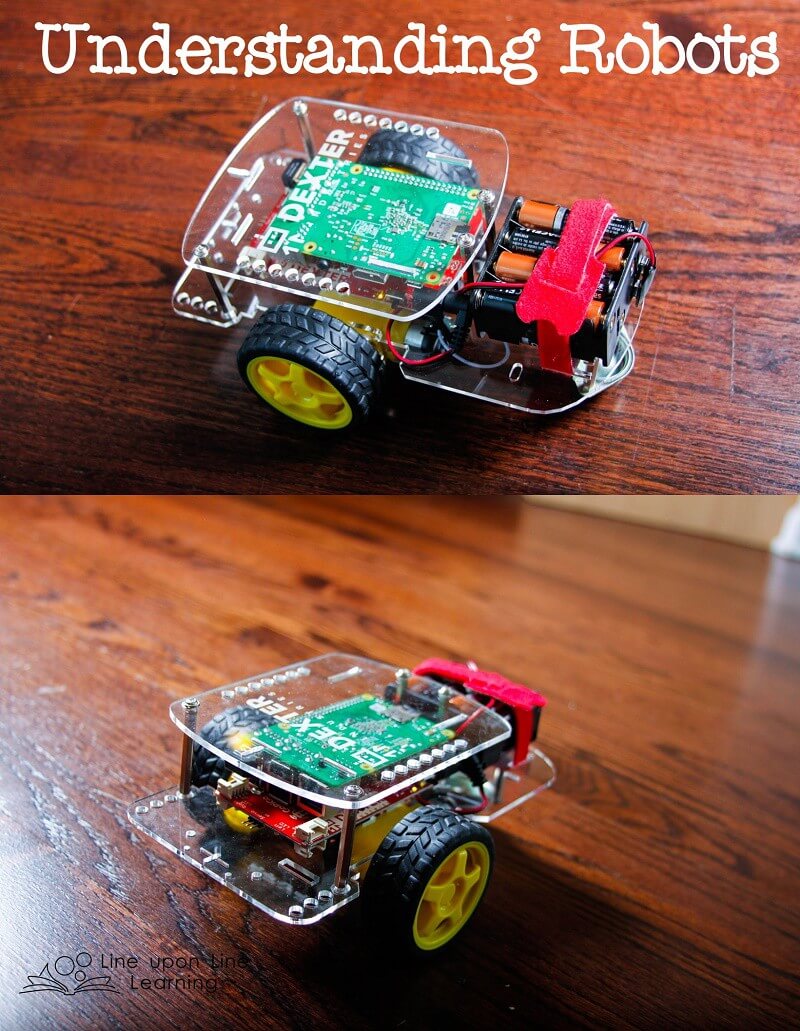
Understanding Robots: Finding the Fantasy in a Story

Understanding what a robot can or cannot do is best when you have an actual robot to program! Our GoPiGo is so much fun.My son loves computer programming using Scratch, and he has always loved using Snap Circuits to create his own electrical circuits. As Christmas approached last year, I wondered what I could get him that would truly meet his current needs and interests, as well as being something he can grow with this year. Due to my husband’s own insistence that I focus on STEM concepts with my son, I was drawn to the concept of a robot.
I decided to go with the GoBox, which packs the GoPiGo robot car (including a Raspberry Pi) with a monthly kit of a new challenge or sensor to add to the robot. As we pondered what to do for last weeks’ science fair, we decided to get even more familiar with the robot. In addition to programming the robot car to go around the room and return to start, we made a presentation about what robots are and are not. Further, after reading some fun stories about robots, we researched and discussed what a robot really is and how the stories were accurate and then how the stories bent toward fantasy. Understanding robots is much more fun with a robot to program yourself! Continue reading →